Doctoral school of University of Warsaw
20 October 2025
New academic year started in October. With it, the Doctoral School of the University of Warsaw has published the results of acceptance of doctoral candidates. I wanted to understand what is the structure of each doctoral school and of each field. Here are my observations.
First look
First I want to talk shortly about the structure of the doctoral schools1. At the University of Warsaw we have 4 of them:
- Interdisciplinary Doctoral School
- Doctoral School of Humanities (DSH)
- Doctoral School of Social Sciences (DSSS)
- Doctoral School of Exact and Natural Sciences (DSENS)
We will not consider the Interdisciplinary Doctoral School as in order to get there you need to be accepted into another doctoral school.
Each Doctoral School covers several disciplines, and each discipline has its own recruitment committee. However, candidates are admitted based on more or less the same performance indicators:
- Entry exam (DSENS) / Project proposal(DSH & DSSS) ( 40⁄100 points )
- Scientific backgroud ( 20⁄100 points [SDH & DSSS]; 15+5⁄100 points [DSENS])
- Initial interview ( 40⁄100 points )
Total number of points is 100, each dyscipline has its own number of places and they accept top candidates.
I used official, public records that show both student performance and acceptance status. It also includes the candidates' names, and therefore their gender and probable ethnicity, which I will go deeper into later. Since the data was published in poorly formatted PDF tables, it had to be extracted manually.
Acceptance rate
Let's first take a look at the acceptance rate of each dyscipline.
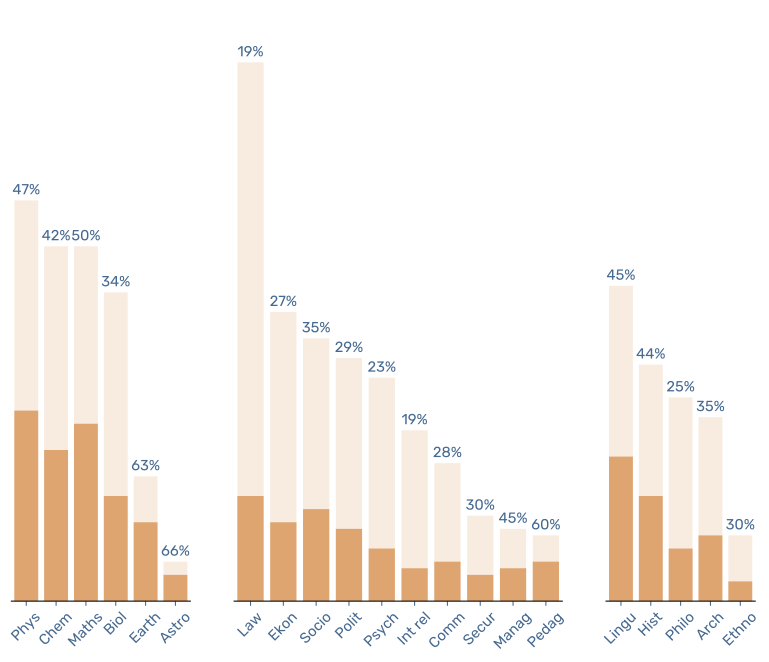
We can see a clear disparity in the results. On one end, the Law Faculty had the most applicants and, along with International Relations, the lowest acceptance rate (around 1/5). On the other end, disciplines like Earth Sciences, Astronomy, and Pedagogical Studies had acceptance rates as high as 3/5.
Overall, it is harder to get into DSH and DSSS than into DSENS. This might suggest that natural science students have more job options outside academia. However, DSENS also offers the highest number of spots, which suggests these faculties generate the most funding.
Now lets take a look at the acceptance rate splited into sex and ethnicity.
Sex division
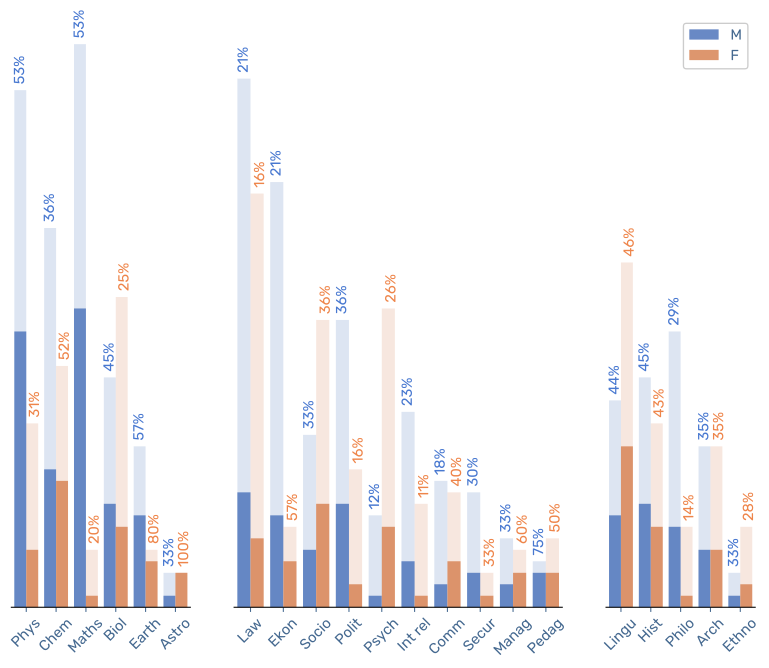
It is clearly visible that there are many disciplines where the proportions of men and women are not the same. Most visible examples are Physics, Mathematics and Informatics, where it is mostly man who was applying and got accepted. Woman however dominate in the psychology department.
On average, acceptance rates are similar for both men and women, suggesting no significant gender bias in the selection process.
Ethnicity division
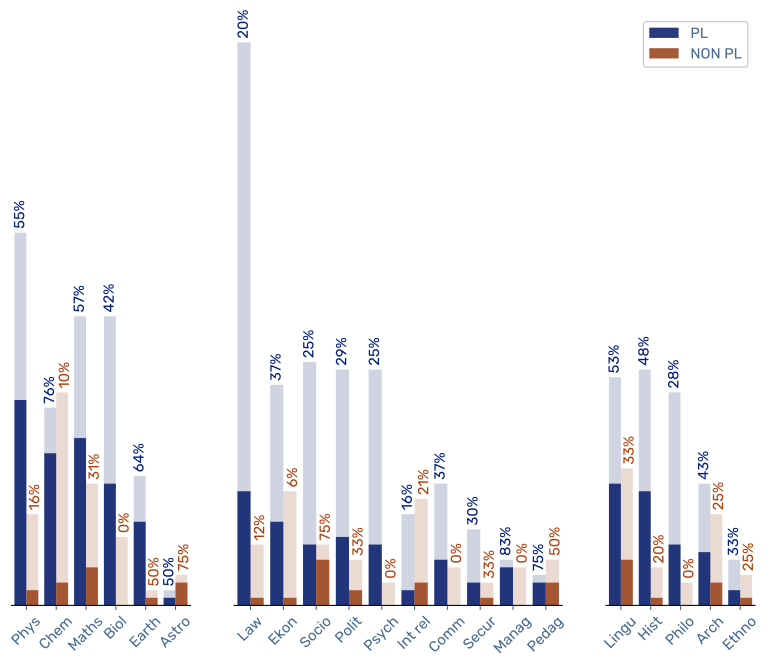
I was surprised to see that relatively few foreign students were accepted overall. The only exception was International Relations, where international students actually outnumbered Polish admits. There are quite a few interesting observations to be made here.
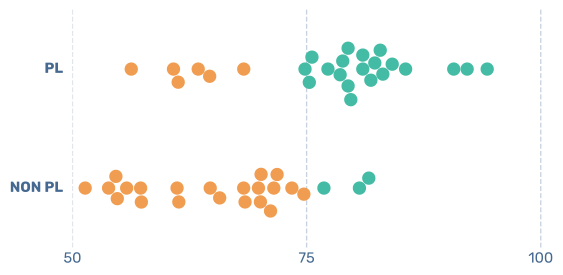
One of the most interesting findings comes from the Chemistry Department. Even though more foreign students applied than Polish ones, only 10% of them got in. In contrast, 76% of the accepted students were Polish. I will take a closer look at Chemistry later on.
Most of the faculties had lower acceptance rate for foreign students than for Polish ones. Only two faculties accepted more foreign students than Polish ones: Astronomy and International Relations.
Distribution of points
Now let's take a look at the distribution of points for each dyscipline. First we look at the total points in each dyscypline and doctoral school. In addition the color indicate the status of recommended for admission , reserve list and rejected.
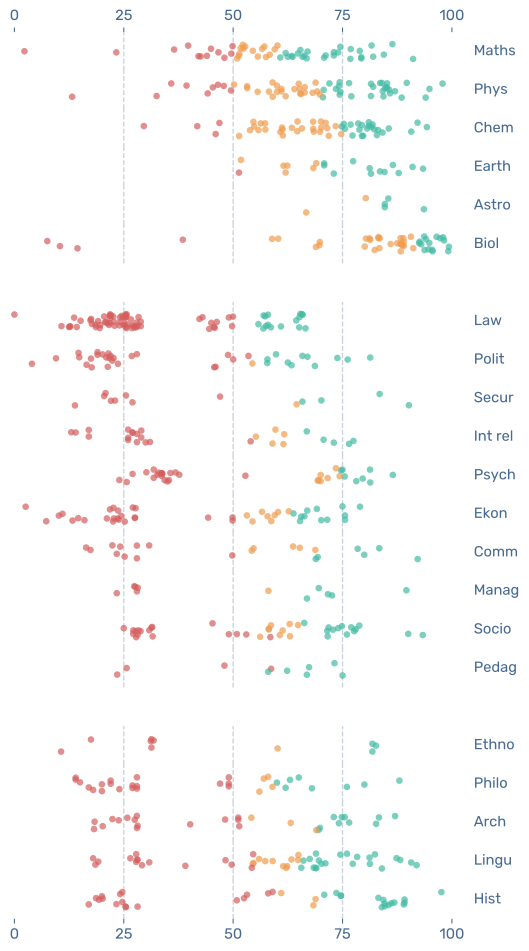
Here are some observations:
- Maths and Computer Science together with Physics have the most spread results
- Biology is an anomaly because applicants needed a score of approximately 90% to be accepted.
- There are visibly more people in the Social and Humanities Doctoral School around 20-40%, but it is due to the rules' differences2
- There are no reserve candidates in the Law Department
We can also examine the paritcular parts of the final points. The plot below shows the distribution split in 3 categories: Activity (0-20), Interview (0-40) and Exam/Proposal (0-40). The color coding is the same as in the previous plot.
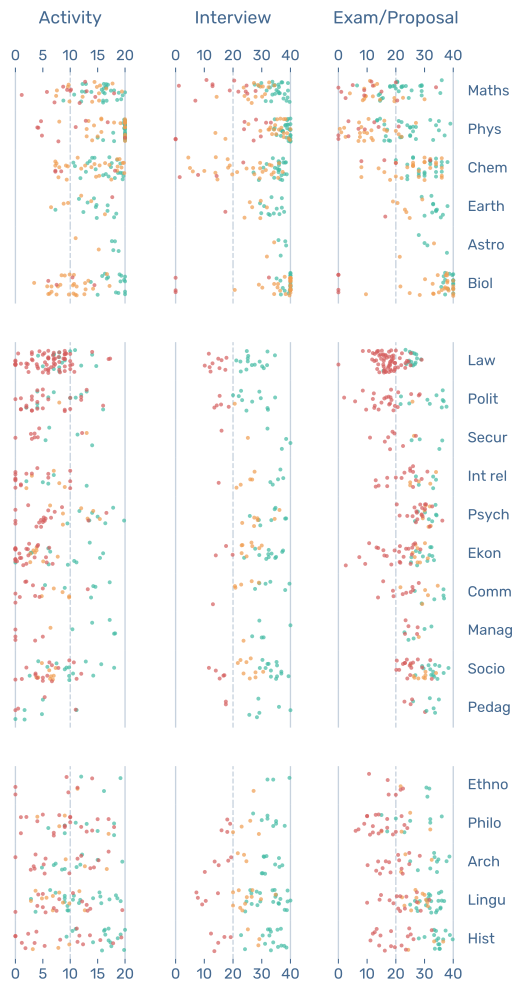
Observations:
- The fairest exams were in Math, Computer Science, and Physics. While other exams saw candidates' scores clumped together in clusters, these exams successfully distributed points across the full range.
- The worst exam was at the Biology, but more about it later
- Most of the candidates maxed out the activity part
- Most of Laywers have less than 50% for the activity
- Humanities have a good spread in all the categories
Anomalies
There is few anomalies I want to point out.
Biology
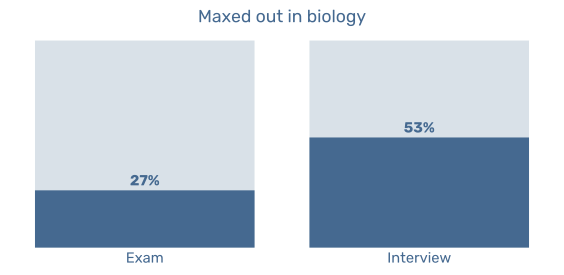
The exam was too easy and the interviews didn't separate the candidates well. One person even got a perfect score on both but was still rejected. Because everyone scored so high, the activity score was the only thing that actually mattered.
Chemistry
Many international students were just outside of the acceptacne threshold and got rejected.
It get even worse when we look at the individual categories.
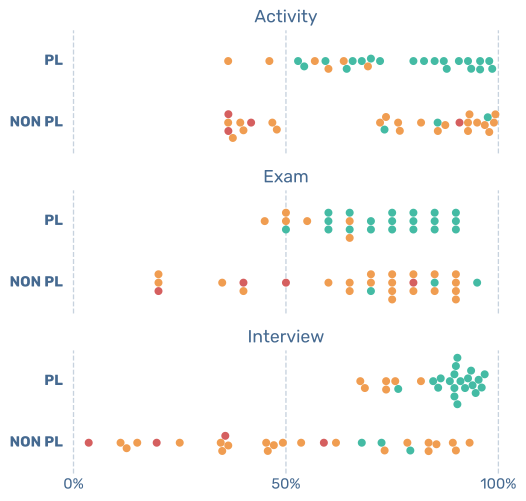
Activity and Interviews went quite well for Polish and non-Polish people, however the exam was too easy for Polish candidates. Most of the Polish people have more around 90% points from the exam, while non-Polish people have spread through the whole range.
Footnotes
-
In the Social Sciences and Humanities doctoral school, you must score over 50% on your project proposal to get an interview. Many applicants score under 20 points on the proposal and between 0 and 20 points for their activity. As a result, most disqualified candidates end up with a total score in the 20 to 40 point range. ↩