Asbestos in Poland
10 April 2026
Asbestos in Poland is still a topic of debate. Even though it was banned in 19971, the official anti-asbestos program didn't start until 2009. It was expected to take over 20 years to eliminate all asbestos from Polish houses, with the original (and still ongoing) plan aiming to remove it all by 2032. This is likely not going to happen and NIK (Supreme Audit Office) report from 2023 shows that it will take over 50 years to remove asbestos from certain cities2. There are many articles about this already, so I won't go into the technical details here.
What I wanted to show here is a map presenting the asbestos distribution in Poland3. This map isn't anyhow new, but I wanted to create my own using an outline I haven't seen anywhere else. Whenever I saw this data, I recognized a specific shape appearing, but no one seemed to be talking about it, so I made my own map to highlight it.
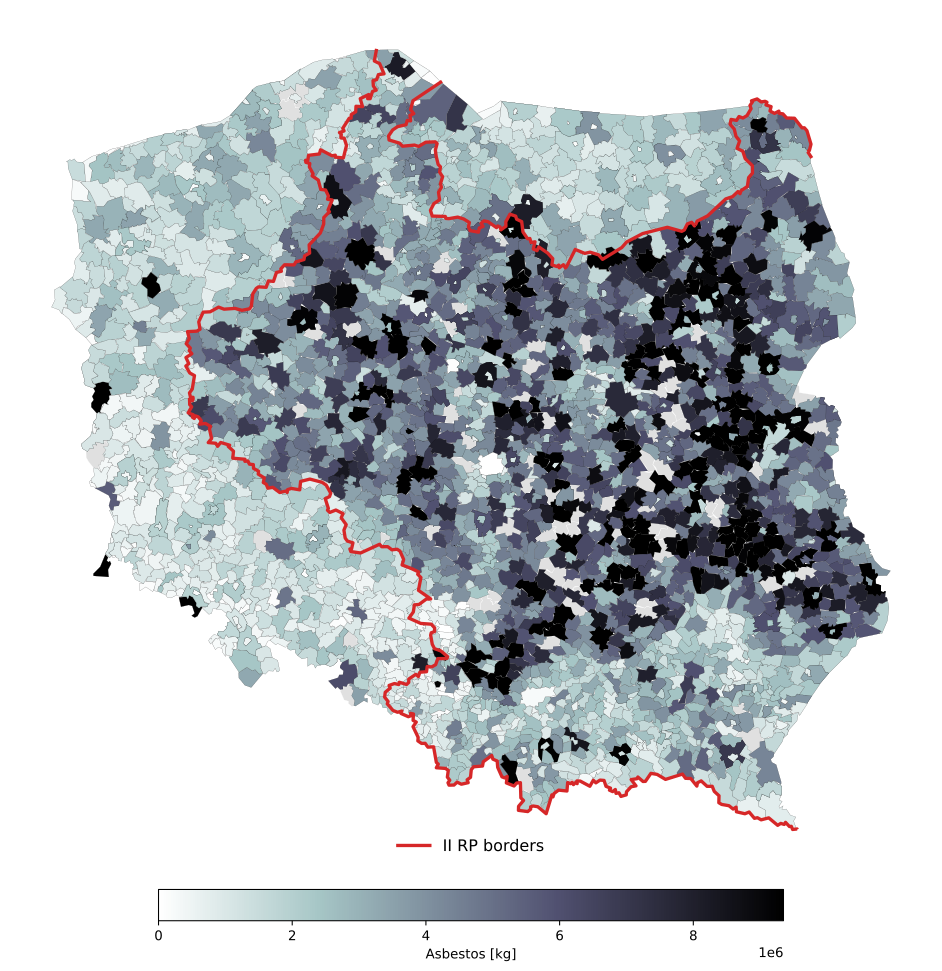
What is really interesting is that the distribution of asbestos usage almost perfectly correlates with the shape of the old Polish borders from 1938. It’s an exceptional fit. The only major outliers are the Lesser Poland and Podkarpackie Voivodeships.
There seems to be no simple explanation of this. My best guess is that the territories of the Second Polish Republic (IIRP) suffered more destruction than the Western Territories and Masuria (which previously belonged to Germany). This led to a massive need for new materials (including asbestos) to rebuild Poland. But again, I don’t want to sound like an expert; I just wanted to visualize the map and plot one more plot with visible vertical division of Poland.
One last fun fact: there are some notable "black spots" (high concentration) in regions where there isn't much asbestos overall. As far as I’ve checked, several of these points are simply the sites of former asbestos manufacturing plants or other heavy industrial factories.